
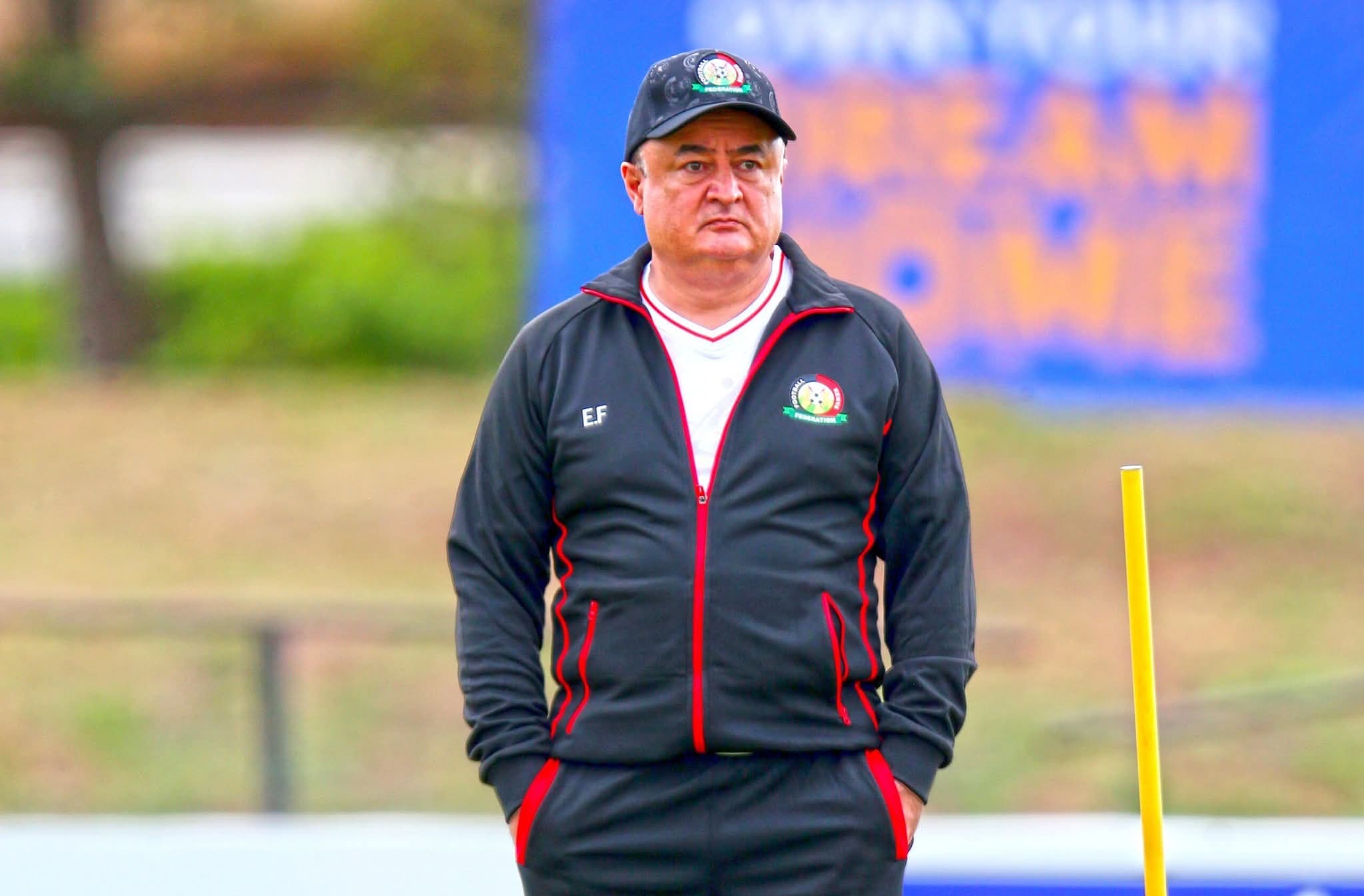
I first really understood who Engin was in Morocco in 2021. At the time, I was serving as the Media Liaison Officer for the Kenya national football team, Harambee Stars.
We had just lost 5–0 to the Mali national football team in a FIFA World Cup qualification match — Engin’s first game in charge of Kenya.
He had barely spent time with the squad and was still learning the players. Some were deployed out of position, and a 19-year-old striker was handed his debut.
On top of that, the match itself was unusual. Mali hosted us in Morocco because their own stadium was unavailable. The pitch was heavily watered, the conditions were difficult, and the team struggled to cope. We were beaten heavily.
Back home, tensions between Amina Mohamed, then Cabinet Secretary for Sports, and Nick Mwendwa, the president of the Football Kenya Federation, were escalating. The federation was on the brink of suspension.
During a performance review with FKF leadership after that defeat, Engin said something I have never forgotten:
“I cannot promise that we will win the next match. But I promise we will play better than we did today.”
Suspension
Soon after, the government suspended the Football Kenya Federation, which triggered a ban by FIFA from international football. The national team stopped playing competitive matches.
Results like that loss to Mali were sometimes cited as justification for the crisis, though the situation was far more complex.
Kenya returned to international football in 2023 after FIFA lifted the suspension. When the team resumed, Firat was clear about one thing: If we want to become a serious football nation, we must play against serious opposition.
And that is exactly what he set out to do.
Iran
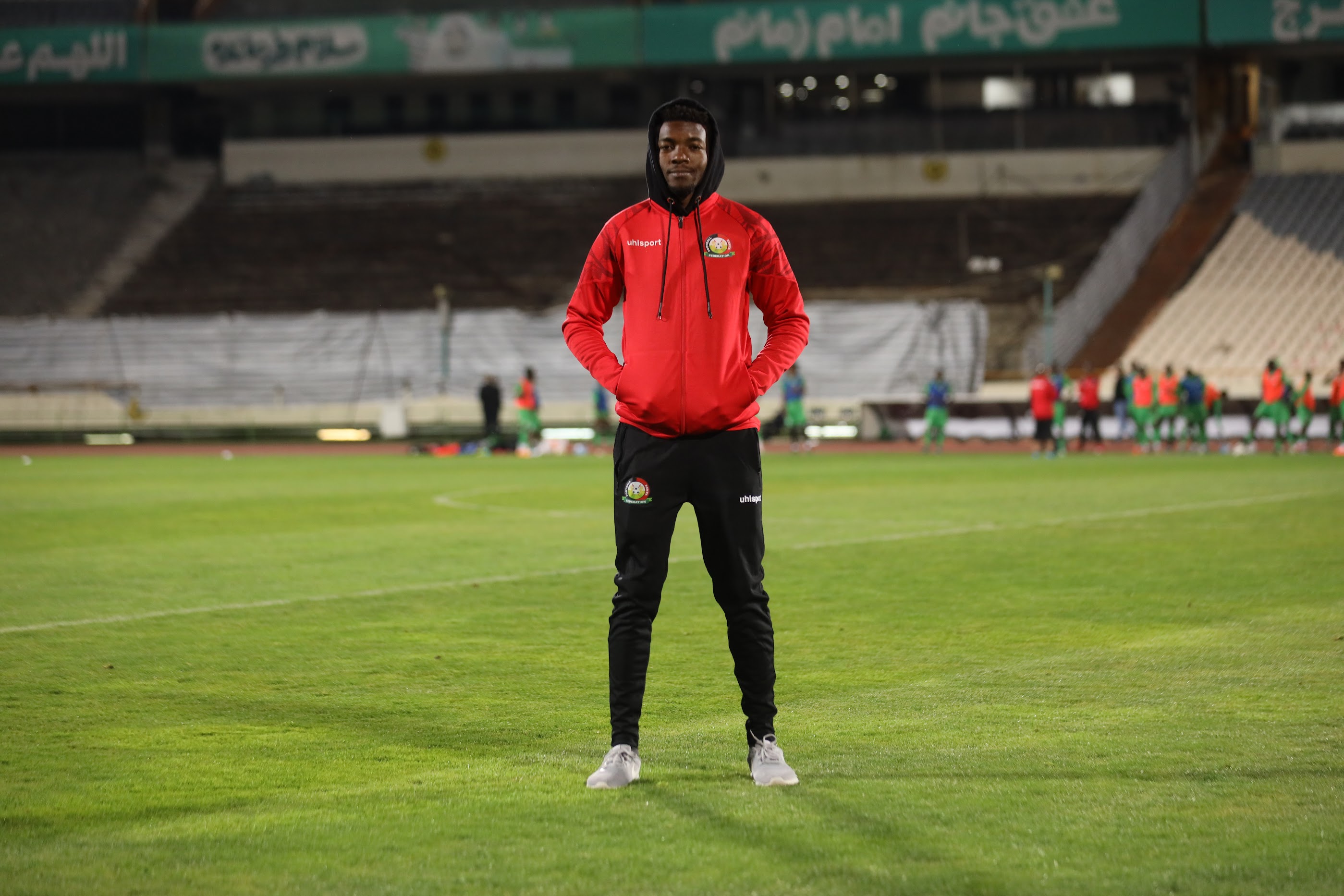
The first major test came in Tehran against the Iran national football team.
Iran was ranked around 30th in the world, while Kenya sat far lower in the rankings. Yet the Kenyan players held their own. Michael Olunga scored to give Kenya the lead.
Iran eventually equalised and later found a late winner after goalkeeper Patrick Matasi conceded a goal late in the match.
Despite the defeat, the performance gave the team confidence. For the first time in a long time, the players felt they could compete with higher-ranked teams.
Qatar
The next stop was Doha, against Qatar national football team, who had recently hosted the 2022 FIFA World Cup.
This match remains one of my favourite memories.
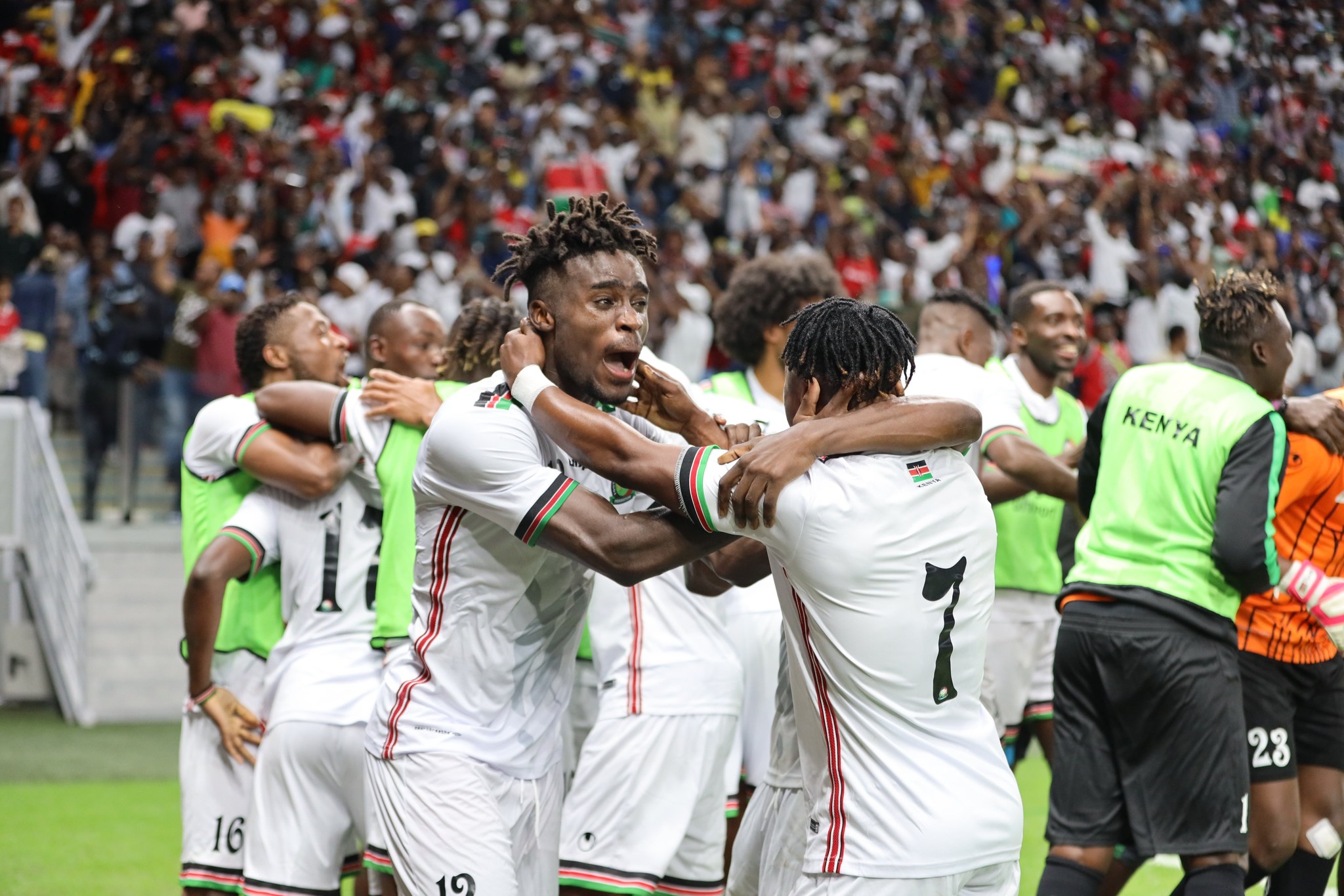
Although we were technically the away team, thousands of Kenyans living in Qatar filled the stadium. The support was overwhelming.
The players responded brilliantly. Kenya won 2–1, with Michael Olunga leading the attack and Amos Nondi scoring the winning goal.
For many Kenyans watching, it was a moment of pride. For those of us travelling with the team, it was proof that Firat’s belief in exposing the team to stronger opposition was paying off.
Russia
Next came a match against the Russia national football team, played in Antalya, Turkey. The camp lasted around ten days and provided the players with a rare opportunity to train and compete in a high-performance international environment.
In that match, Kenyans were introduced to Rooney Onyango. Against expectations, Engin believed Rooney could operate as an attacking player, a decision that surprised many people at the time.
Russia scored early, but Kenya fought back and even took the lead before Russia equalised late in the game. The match ended 2–2.
For a team that had spent years isolated from international football, competing evenly with a World Cup nation was significant.
Four Nations - Malawi
While the team’s performances in friendly matches were encouraging, results in competitive qualifiers remained inconsistent.
However, in March 2024, Kenya finally lifted a trophy at the Four Nations Tournament, played in Lilongwe, Malawi. The tournament featured the hosts, Kenya, Zimbabwe and Zambia.
The host Federation had drawn themselves against Kenya in the semifinal, perhaps seeing us as the easier opponent. Instead, Harambee Stars won 4–0, stunning the home crowd.
Kenya then defeated Zimbabwe national football team 3–1 in the final, completing a comeback victory to win a trophy, something the national team had not achieved in many years.
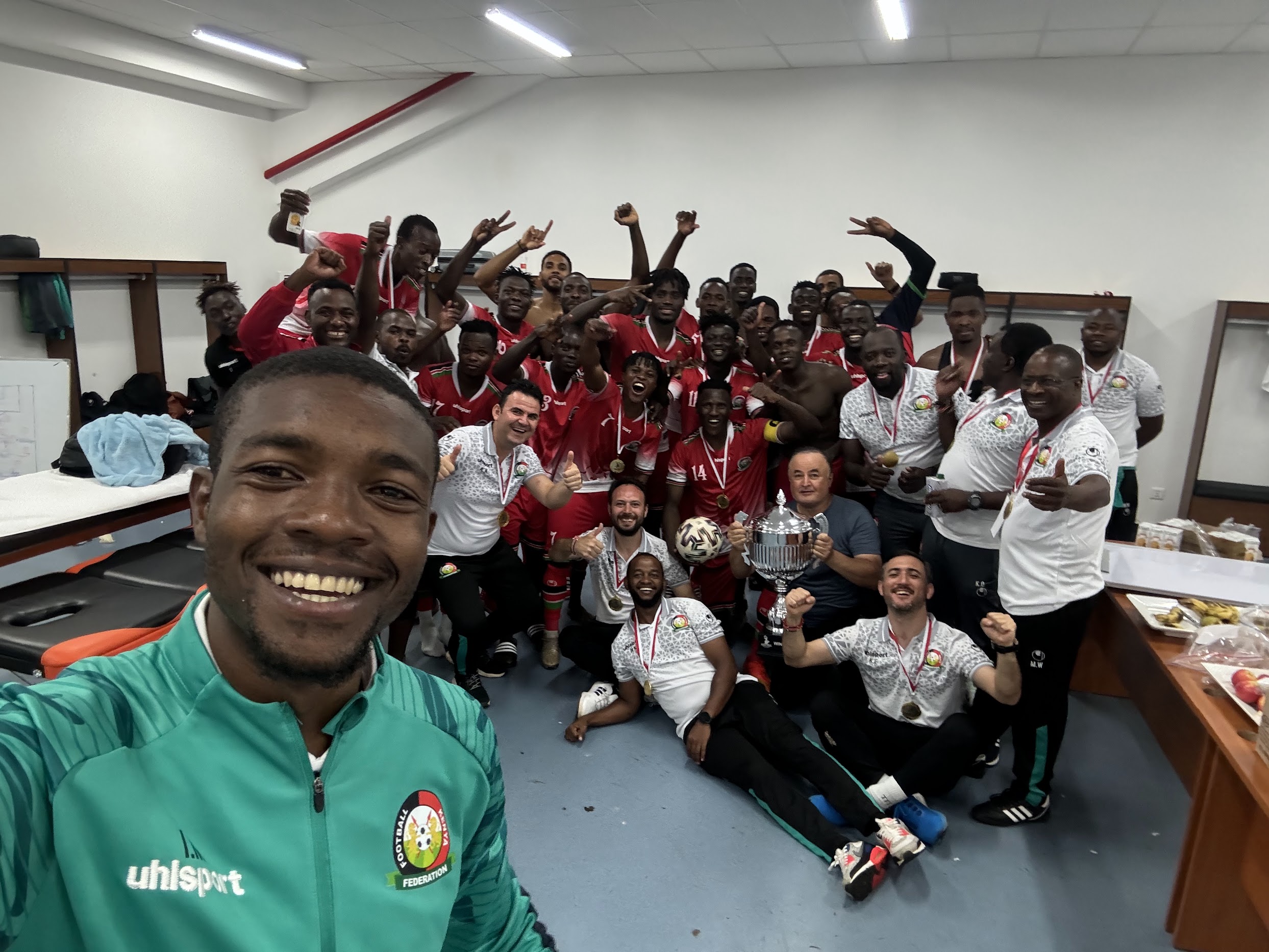
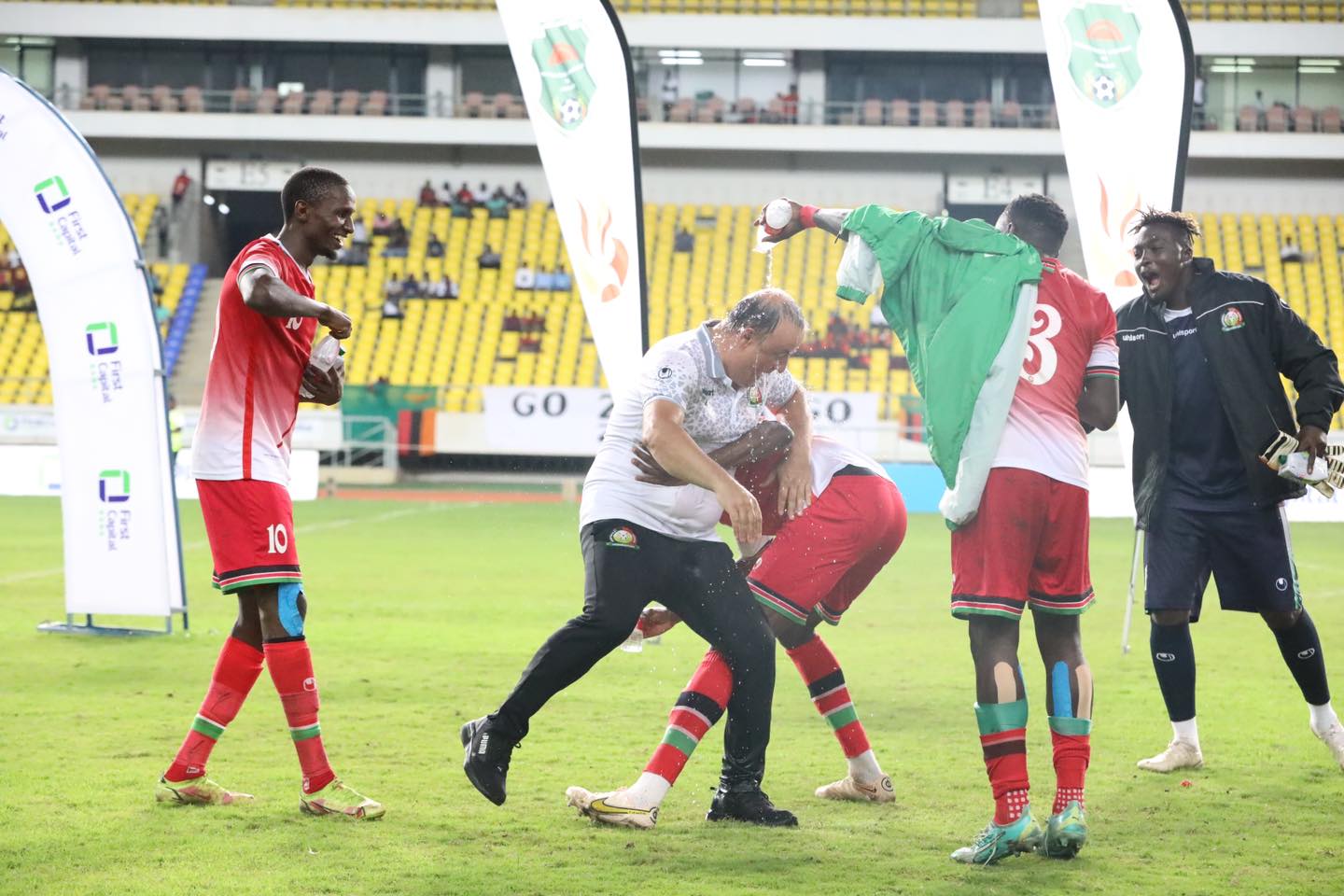
A rare dressing room photo of the team celebrating after winning the Four Nations tournament in Malawi, in March 2024. I had to get myself in one of the shots.
Signing Off
That tournament also marked my final assignment with Harambee Stars. Soon after, I stepped away to pursue personal interests.
But I will always value the exposure that Engin’s approach gave many of us.
We travelled across continents, faced some of the world’s best teams, and experienced professional football environments that very few Kenyans ever get to see up close. Those experiences were lessons no classroom could teach.
The Coach
Engin was disciplined. His training sessions were rarely long, but they were extremely intense and carefully structured. Every exercise had a purpose. Every player understood their role.
He was also direct, sometimes brutally so. He faced criticism along the way. But those of us who worked closely with him saw something else: the effort, the honesty, and the belief that Kenya could compete on bigger stages.
For all the debate around his tenure, Engin gave Kenyan football something valuable: exposure to the global game and a reminder that improvement begins with ambition.
Those of us who witnessed that journey up close will never forget it.
Rest in peace, coach.